On Saturday, June 7, 2025, PLS will host York Plays 2025. It promises to be a rare and historically significant theatrical event: a full production of the medieval York Corpus Christi Plays. This marks the first time in 27 years that the complete cycle will be staged in its entirety.
For a generation of younger scholars and theatre practitioners, the spring production will be their first opportunity to witness these plays performed as a cohesive whole. This vital experience will help scholars probe deeper into the dramatic, thematic, and cultural complexities of the individual plays and the York Cycle as a whole.
The York Plays, originally performed annually from 1376 to 1569, consist of 50 short scripts that dramatize biblical stories or imaginative medieval interpretations of them. Performed by local craft guilds on movable pageant wagons, these plays formed a theatrical procession through the city of York, England, beginning at sunrise and continuing late into the night. Like similar Corpus Christi plays from other medieval towns, the York cycle spans the Biblical narrative, from the creation of the universe to the Last Judgment, with a central focus on the lives of Jesus and Mary.
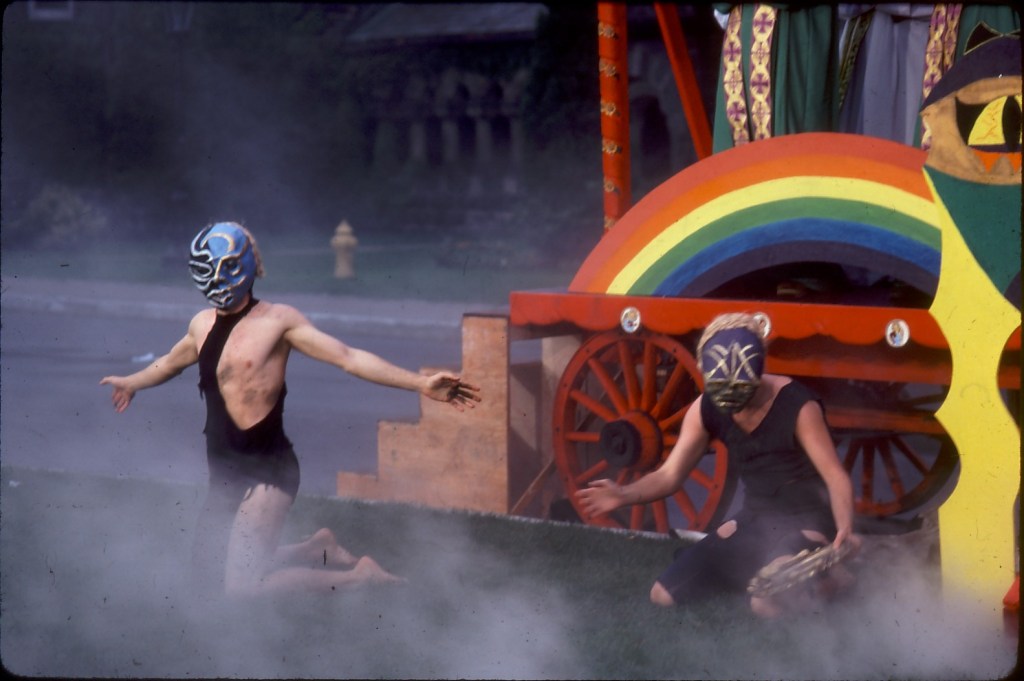
Our 2025 production will revive this tradition with 17 performance groups from across North America staging the cycle using original medieval production practices–or as close as we can get. Performances will begin at 6:00 AM and continue past midnight, rotating across three outdoor stations at the University of Toronto’s Burwash Quad. All of the plays will be free and open to the public. The production will offer a rare opportunity for scholars and audiences alike to witness the York Cycle as it was intended: performed in its entirety over a single day.
The Significance of Full Production
It has been 27 years since the York Plays were last produced in full, in 1998, by PLS. That production, like the our original 1977 staging (which was interrupted due to weather), was groundbreaking in its contribution to both academic study and theatrical practice. Producing the entire cycle provides unparalleled insights into the plays’ dramatic structure, thematic continuity, and communal significance.
For scholars, full productions are vital for understanding how these plays operated within their original social and religious contexts. Watching the plays unfold in sequence allows researchers to analyze their narrative cohesion and the dramatic contrasts between episodes. The logistical challenges of staging all fifty plays in one day also offer insights into medieval stagecraft, including the use of pageant wagons, actor doubling, and audience engagement.

The Text
Staying true to the spirit of the original fifteenth-century performances, we will present every surviving word of the plays—but with an eye toward accessibility and creativity.
To help modern audiences connect with the text, we’re using Christina M. Fitzgerald’s updated spelling edition as our starting point, along with additional versions she’s crafting exclusively for this production. From there, each of the 17 participating groups will adapt the language as needed to ensure it resonates with their audiences while preserving the integrity of every word and line.
Sadly, the York Plays have not survived intact. Some are missing lines, pages, or even entire sections, and three plays have been lost completely. In keeping with the medieval guild players’ tradition of weaving innovation into their performances, our groups will fill these gaps with original content. Drawing on surviving fragments, historical context, and their own creative imaginations, they’ll recreate the missing pieces to bring the cycle to life as fully as possible.
The result will be a dynamic production that reflects both the unity and diversity of the original performances. Just as the medieval cycle was shaped by the many voices of York’s guilds, our staging will blend historical fidelity with modern interpretation.
The Legacy of PLS
PLS has long been a leader in the study and performance of early English drama. The 1977 and 1998 productions of the York Plays were pivotal moments in the field, shifting the focus from textual analysis to the exploration of historical stage conventions. By making the plays accessible to modern audiences, these productions demonstrated the relevance of medieval drama to contemporary culture.
The 1998 production was particularly noteworthy for its experimental approach, which combined historical fidelity with creative reinterpretation. It brought together diverse local, national, and international performance groups, creating a vibrant community of artists and scholars. The production also inspired extensive academic reflection, including a special issue of Early Theatre: A Journal Associated with the Records of Early English Drama.
A Unique Opportunity for Learning and Engagement
The 2025 production of the York Plays offers scholars a rare opportunity to observe medieval drama as a living art form. Performing the cycle in its entirety provides a dynamic framework for exploring questions of staging, audience interaction, and narrative continuity. At the same time, the plays’ episodic structure and vivid storytelling make them accessible and engaging for audiences of all ages.
In addition to Saturday’s performances, a series of workshops, talks, and discussions will take place on Sunday, June 8. These sessions will deepen the connection between research and performance, fostering dialogue between scholars, artists, and the public.
York Plays 2025 will offer a rare and invaluable opportunity to explore the dramatic and cultural heritage of medieval England. Whether as a scholarly resource, a theatrical experience, or a family-friendly outing, the 2025 production promises to illuminate the enduring power of these plays to entertain, educate, and inspire.
Mark your calendars for this extraordinary event—a celebration of medieval drama that bridges past and present, scholarship and performance, in the heart of Toronto.
 Poculi Ludique Societas